
The Resource Library - My Best Therapy Tools
My best tools to help you save time and money are assembled here. Check back regularly for new tools.
R Sentences
Here are 30 sentences with R words, grouped into sentences that contain 2, 3, or 4 R words per sentence.
To use these sentence for phonemic awareness, read a sentence aloud, have the client repeat the sentence, and then ask the client to recall all the words that have the R sound.
To learn more about this technique, please listen to my podcast episode #66 – It’s Not The Plane, It’s The Pilot.
The space in the center can be a “free” space, or it can be for when they use a “sparkle” word. “Sparkle” words are more sophisticated vocabulary choices, such as “terrified” instead of “scared” or “huge” rather than “big.” Use bingo chips or dry erase markers to mark off each conjunction used in a story retell. You can play it individually, or collaboratively, and you may even want to go for blackout for a challenge!
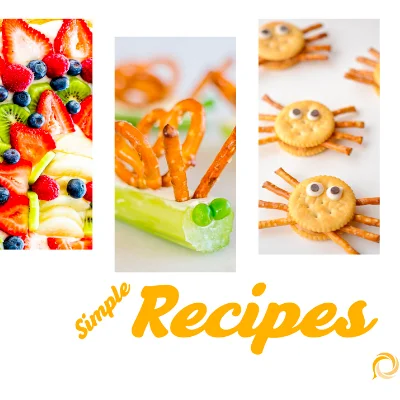
Simple Recipes Cookbook
With these recipes, your clients can perform like Youtube chefs! These simple, but fun recipes help them generalize language and speech targets through video. And, they can eat the results!
Featured in podcast Episode 5 – The Tipping Point
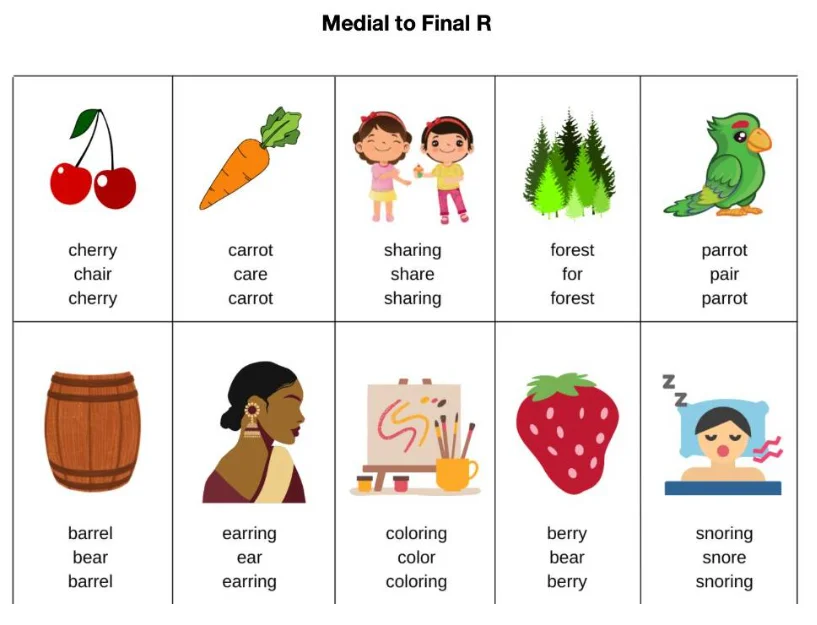
Medial to Final R
Have a client struggling with final R? This handy worksheets sandwiches final R between two medial R words. For some kiddos, this approach is just the ticket to understanding how to say final R.
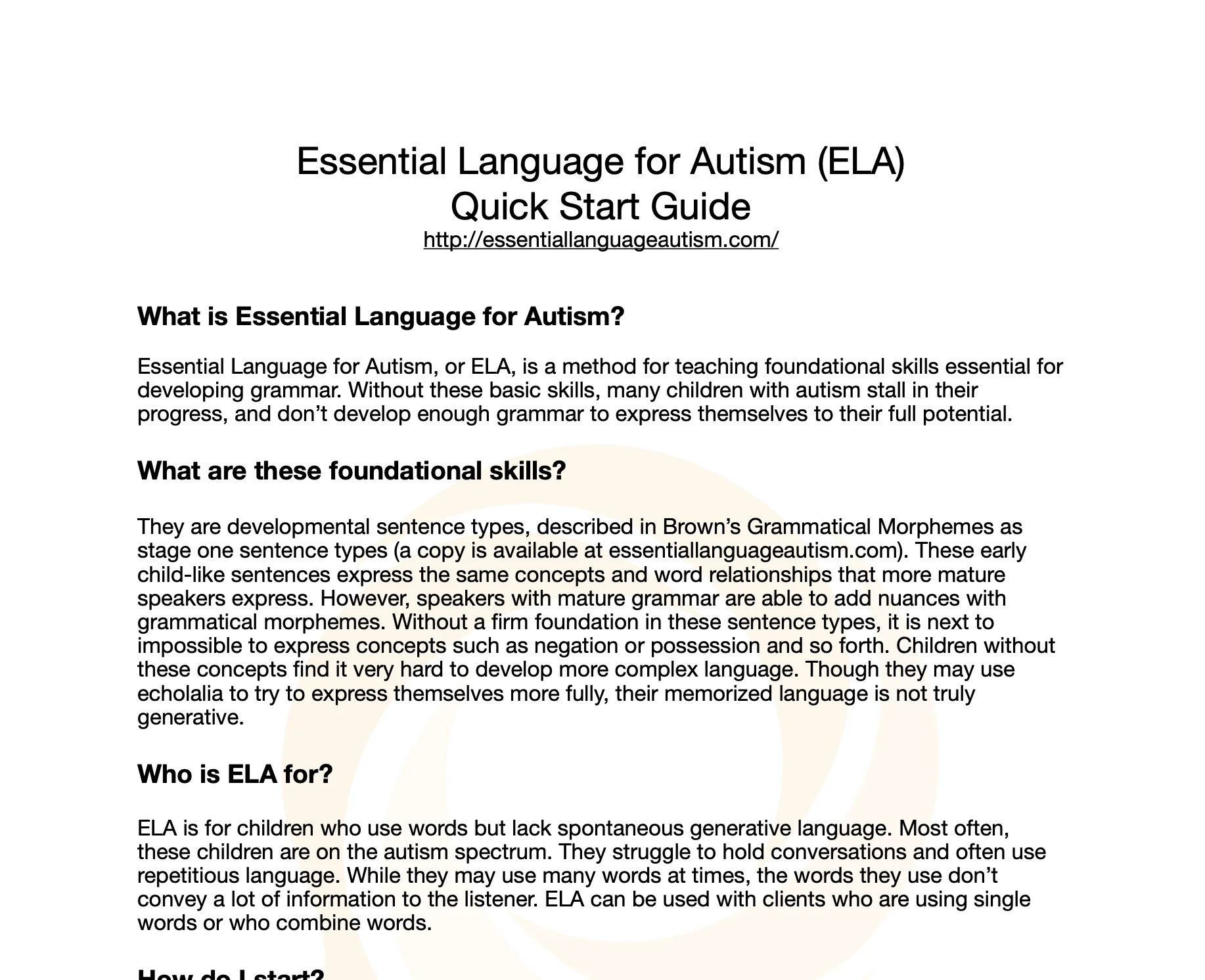
Quick Start Guide
This is truly the most exciting thing I have experienced in years and I am so glad to share it with you. As you probably heard on the podcast The Speech Umbrella episodes 25, 26 & 27, the results I have experienced are amazing. I hope you will have a chance to implement this approach and have similar results.
I want to hear your thoughts comments, observations and (most important) results! Please email me at [email protected] and we’ll talk.
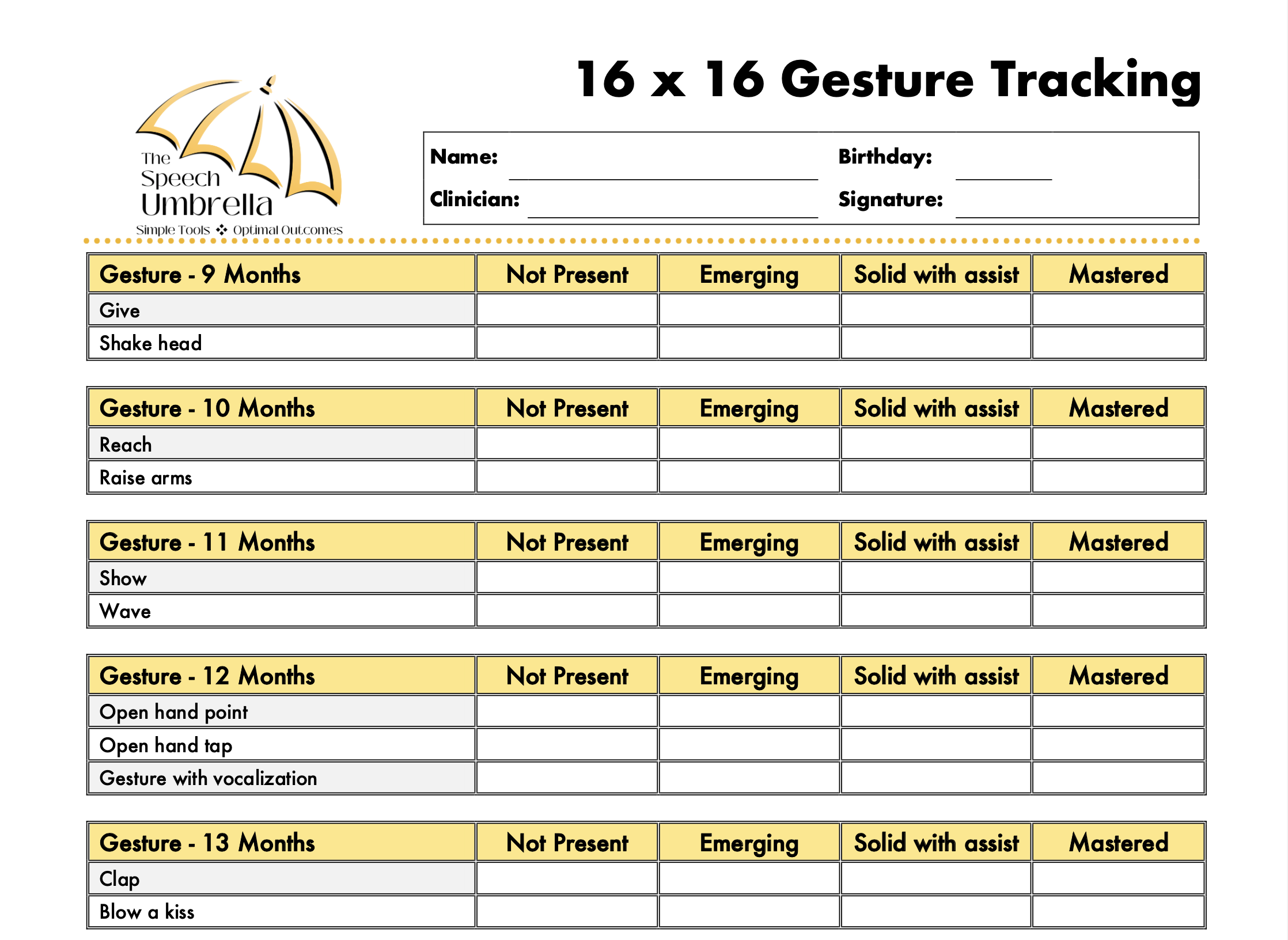
16 Gestures By 16 Months Tracking Form
Early Intervention therapy can be challenging without good information on the developmental order of foundational skills, such as gestures. As Denise discussed in Episode 33 of The Speech Umbrella she found a great resource at The First Words Project. The 16 by 16 series is designed to help identify the critical social communication skills that children should reach by 16 months in order to launch language learning, literacy, and much more by 24 months. This tracking form helps you keep track of this information as you work with these young clients.
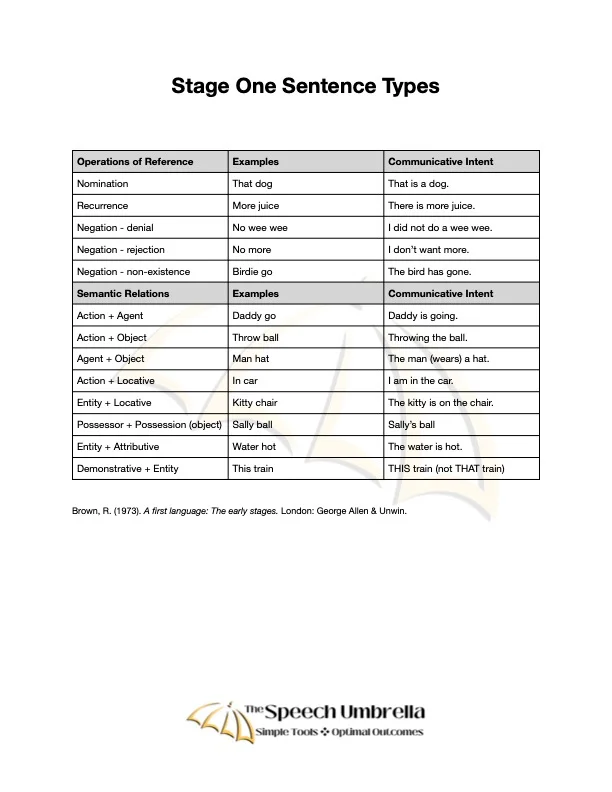
Stage One Sentence Types
Using stage one sentence types can be a critical teaching tool for language development in children with autism. Children without all a firm grasp of stage one sentence types hit a ceiling in expressive language. Find out why in Episode 25 of The Speech Umbrella podcast. Stage one sentence types is a foundational tool I use when implementing my Essential Language for Autism (ELA) method.
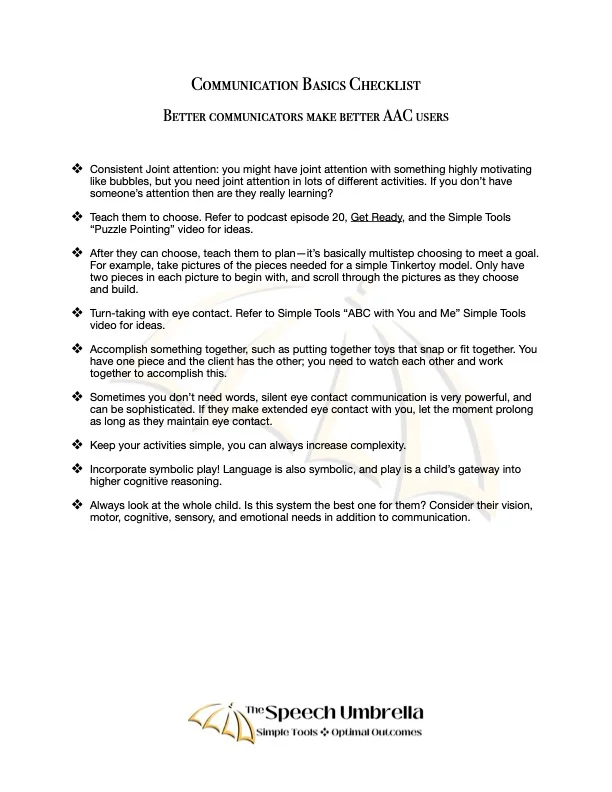
Communication Basics Checklist
Featured in The Speech Umbrella Episode 22: Go! With AAC: Everything Has A Name
Because communication is about so much more than words, teaching non-verbal clients how to communicate, either verbally or with an AAC device can be very challenging. If you feel like you’re rolling a rock uphill in these situations, take a look at my Communication Basics Checklist. Perhaps they are missing foundational skills that will help them function better as communicators.
This checklist describes several foundational skills that many non-verbal clients need before they really “get” communication. These include:
- Consistent Joint Attention
- Choosing
- Planning
- Turn taking with eye contact
- Joint play
- Extended eye contact
- Simple symbolic play

Conversation Goals
Do you find it difficult to teach clients with autism to engage in natural and spontaneous conversation?
Episode 50, The Conversation Game, was about a very effective way to help our clients step into the world of naturally occurring conversation.
Here are some sample goals for measuring conversation progress using the “conversation game” method.
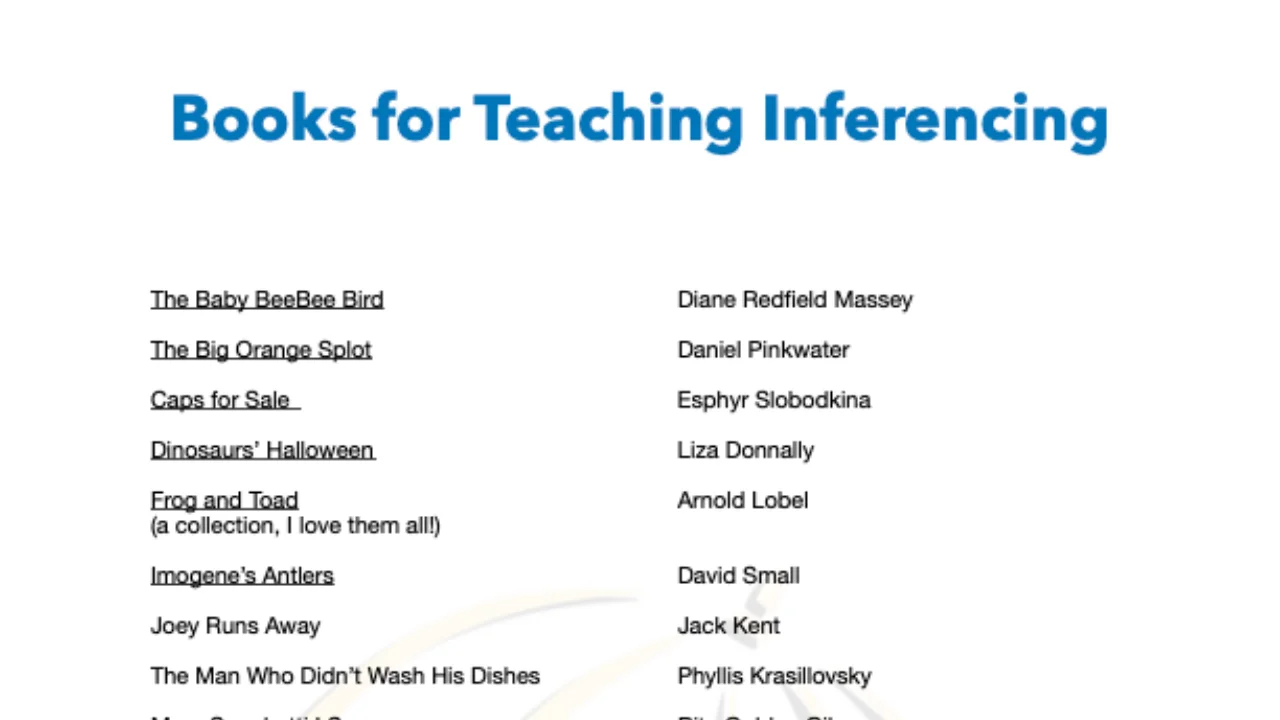
Books for Inferencing
How do you choose books for beginning storytellers that are both simple enough and engaging enough? Under the umbrella of speech-language pathology is story telling, and under that umbrella is introducing our clients to the delight of books, in a way that won’t overwhelm them. This is important because stories ramp up very quickly and become quite complex, even children’s stories.
My idea of an ideal book for this group is one that has
- a clear story arc
- no side trips into irrelevant topics
- multiple opportunities to make clear inferences
- humor on the absurd side, but not too sarcastic
Here’s a list of my favorite books that meet that criteria. This list will keep growing as I find more books I love.
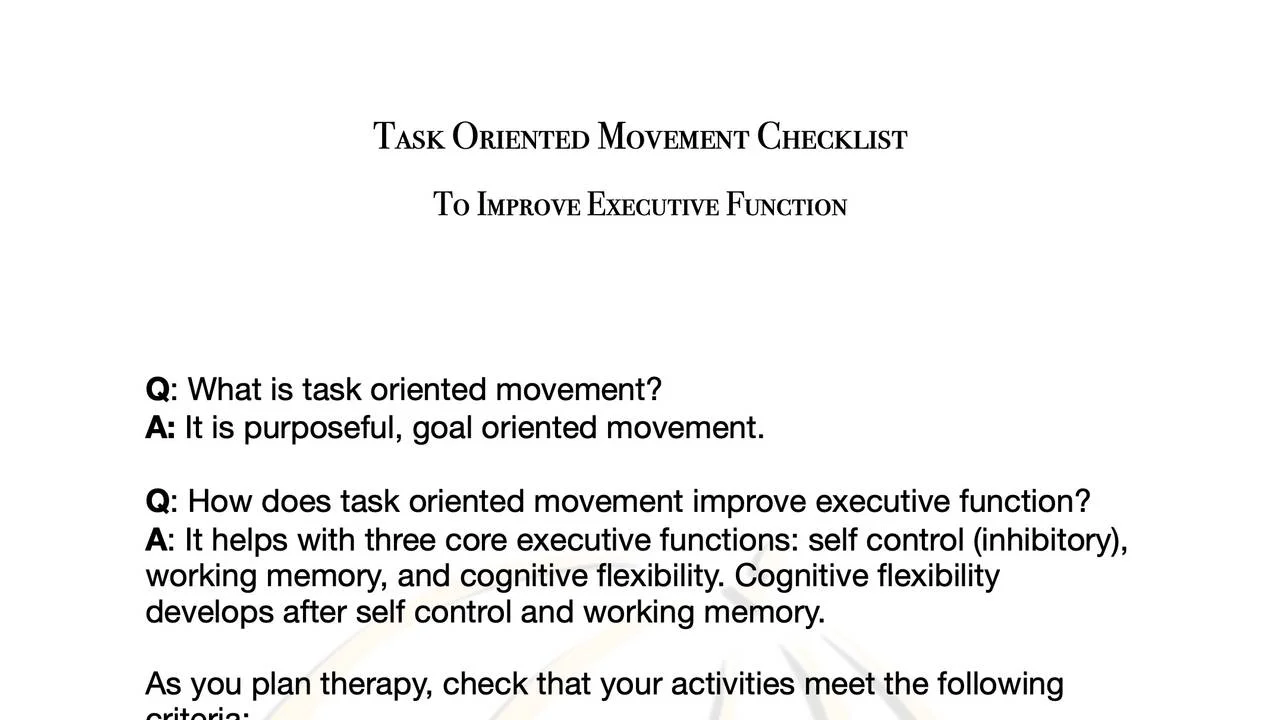
Task Oriented Movement Checklist
Use task oriented movements in your therapy to improve executive function! The checklist PDF is a brief explanation of what task oriented movement is, why it helps executive function, and the criteria an activity needs to meet. The “Reflect and Record” PDF has checkboxes for checking off activities as they are completed, along with additional columns for affixing velcro. This is handy for putting velcro pictures of your activities on the checklist.
Check out my podcast/video cast for three engaging, child-centered task oriented movement activities at thespeechumbrella.com/blog/76.
The Picnic Fun Simple Tools video shows another activity that can be adapted for a task oriented movement activity.
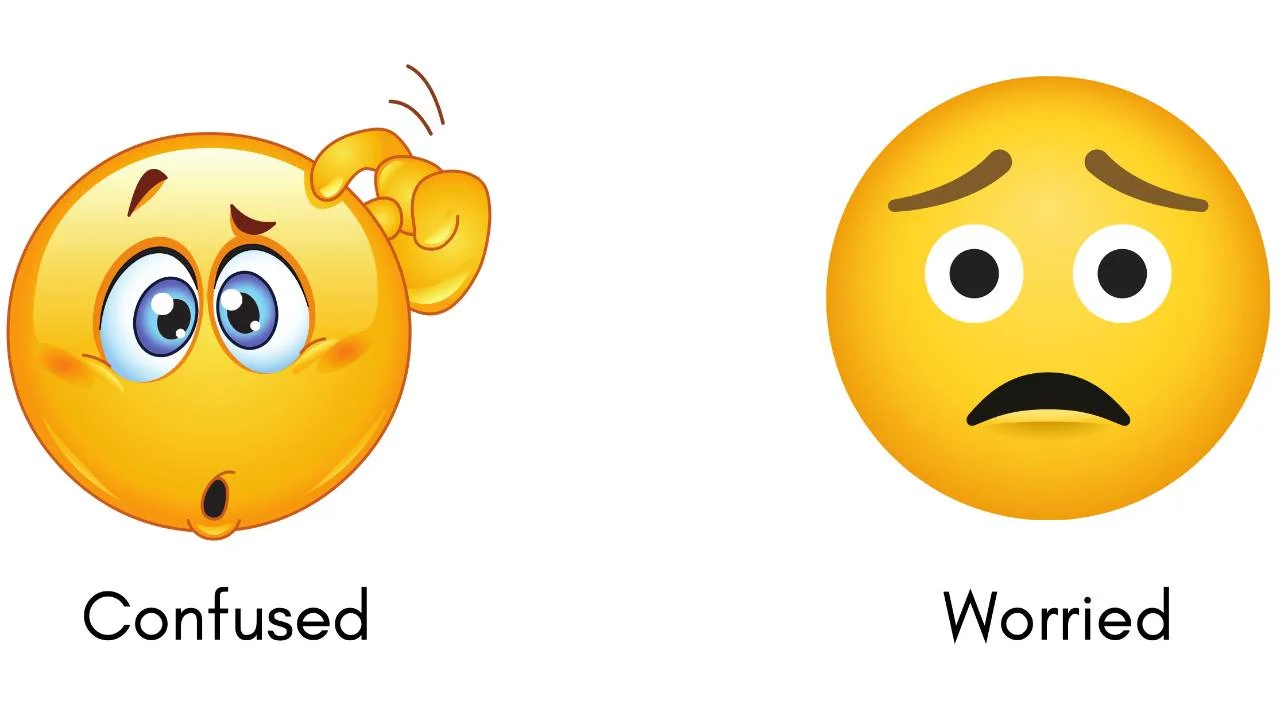
Emoji Time Handout
Do your clients on the autism spectrum have trouble figuring out the vocabulary around emotions? The more senses you can involve the better! With this emoji handout your clients can practice drawing the expressions that go with the emotions. This helps them make connections between what they see, hear, and feel. You can also make lists of
- situations where people might feel that emotion
- times when you, the therapist, felt that way
- a situation where they felt that emotion–this is the BIG win, but these other steps help you get there!
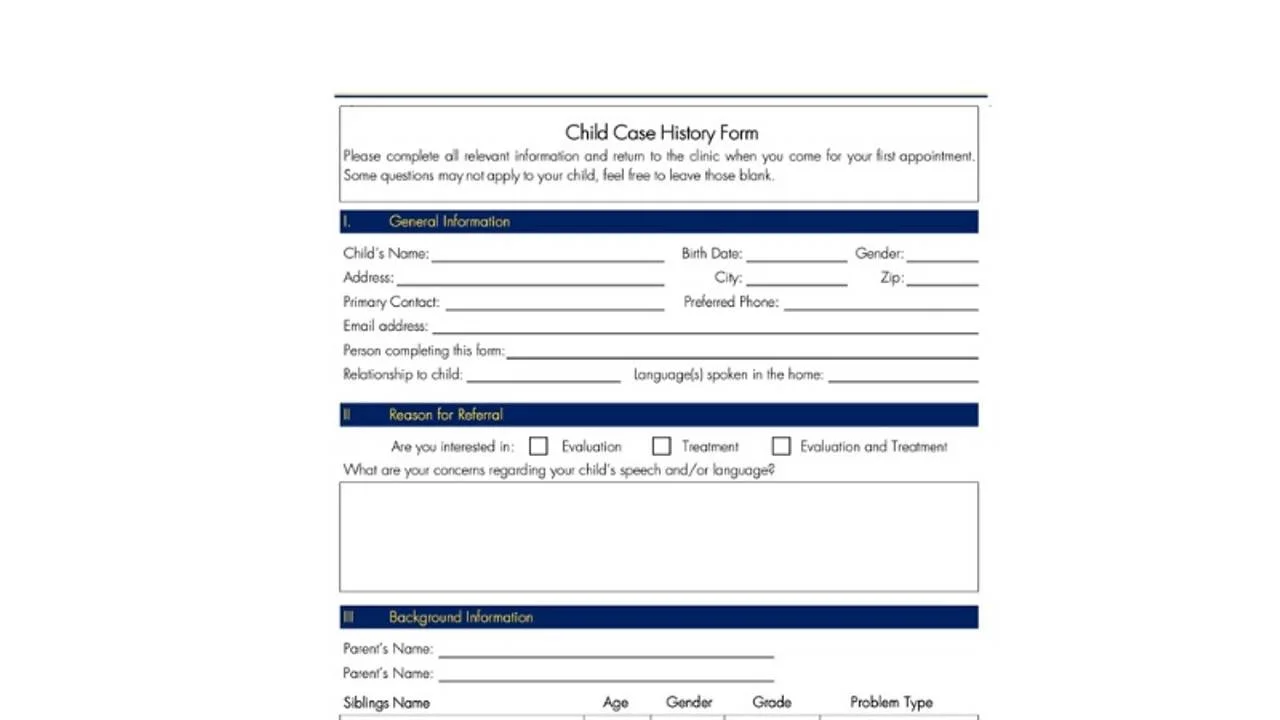
Child Case History Form
Are you looking for a case history form that asks about clients’ reading abilities? Look no further. To customize it with your logo, click on the podcast link below.
Featured in podcast Episode 9 The Book Whisperer Experiment – Part 2
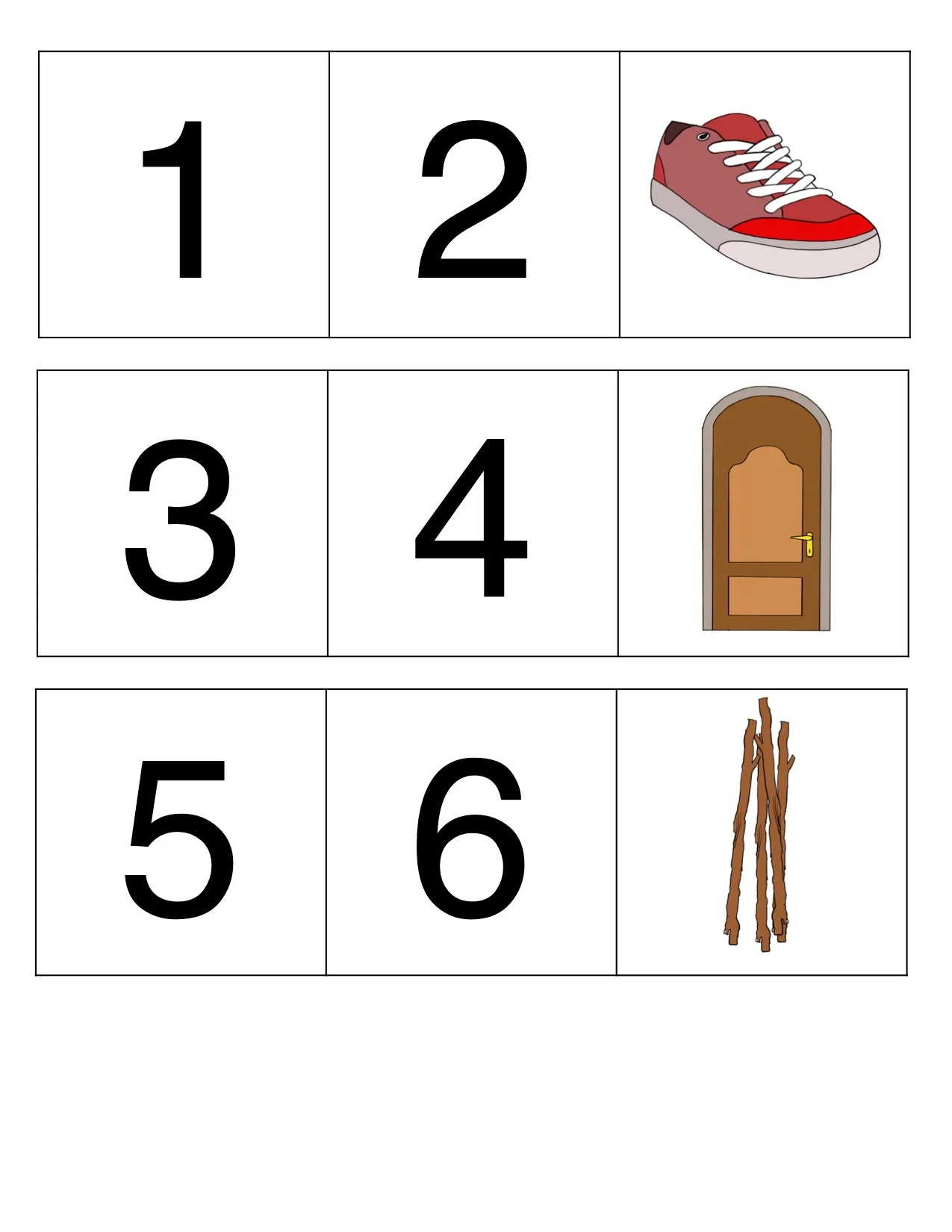
1, 2, Buckle My Shoe – Nursery Rhyme
With this fun printable you can harness the value of nursery rhymes to build listening skills.
Featured in Episode 10 – Under the Umbrella of Phonological Awareness
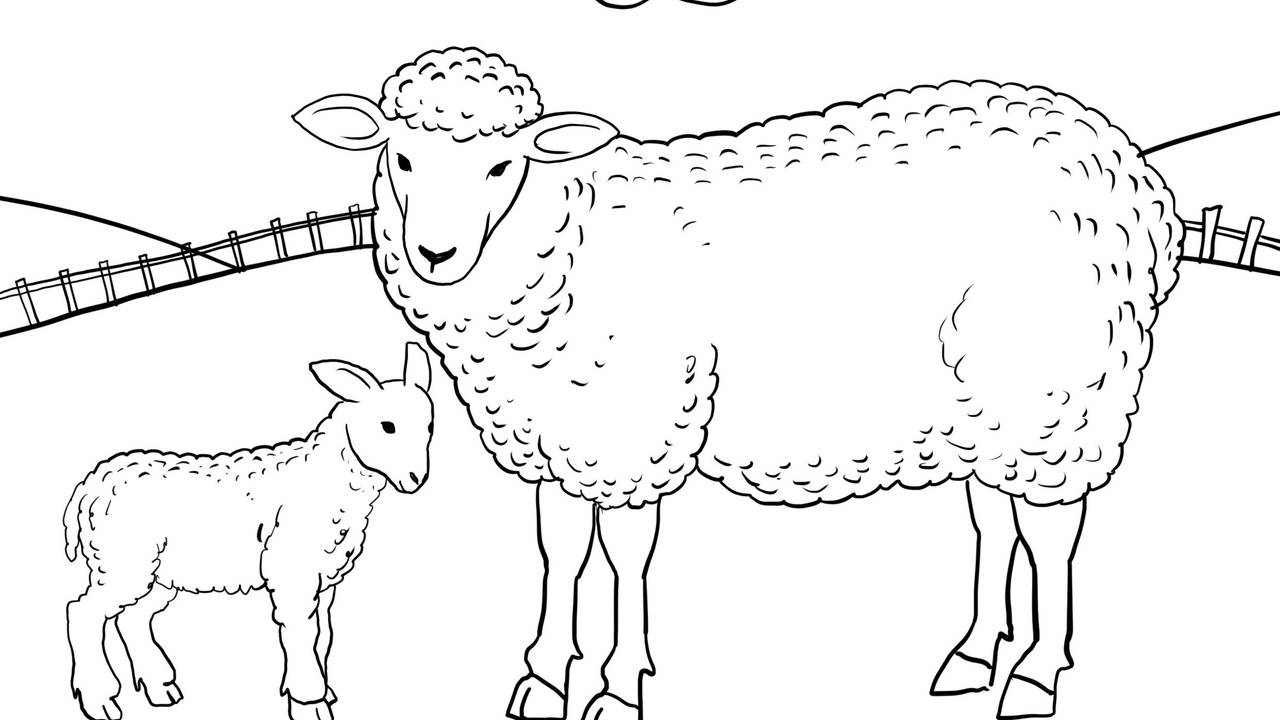
Articulation and Listening Skills with Baa Baa Black Sheep
Therapy activities that do double duty are my favorites. Here’s an activity that can be used for articulation or developing early listening and phonological awareness.
For articulation it is perfect for clients who are working on early CV and VC words, and it’s engaging because there is glue! and cotton balls!
If you’re doing PROMPT therapy here are the target words by stage. No worries if you are not PROMPT trained, these words and this activity are still effective and fun.
- Stage 3: baa, ba (ball), ma, mama, ah (on), up,
- Stage 4: “oo,” mo (more), baby, mommy
Early listening skills are critical because they lead to phonological awareness. If you have clients who speak so quickly that it impedes their intelligibility, 1:1 word correspondence is a fantastic intervention! Baa Baa Black Sheep targets the following skills:
- recall of a single line from a nursery rhyme
- recognition an incorrect word from the nursery rhyme
- production of a deliberate incorrect word themselves
- 1:1 word correspondence
What you need for Articulation activity:
- sheep coloring page
- glue
- cotton balls
- paper plate or scrap paper for glue
What you need for Listening & Phonological Awareness Activity
- carpet markers or anything that they can step on for 1:1 correspondence
- colored cotton balls (optional)
Phonemic Awareness Word Lists
Here’s a quick video that explains how to delete and substitute sounds or syllables from words for phonemic awareness practice. It shows different levels of cueing to help parents understand how they can make home practice successful. It’s based on a method taught by David Kilpatrick.
Dr. Kilpatrick’s book on treating reading disorders is one of the best resources I’ve used. I’ve found it can help remediate articulation disorders that are complicated by weakness in phonological awareness, in addition to reading. The PAST assessment, from Kilpatrick’s Equipped for Reading Success (EFRS) will help therapists determine where to start with each client. Referring to the EFRS manual will help determine what level of difficulty would be appropriate for therapeutic and home practice.
See the link below for the PAST assessment, available for free.
—- links —-
The PAST Assessment https://www.thepasttest.com/
Equipped for Reading Success https://equippedforreadingsuccess.com/shop/
Phonemic Awareness for Parents
I created this video for you to share with your parents to help explain phonemic awareness. It is on my YouTube channel @thespeechumbrella.
You can share the link below with them to send them directly to this video if you would like:
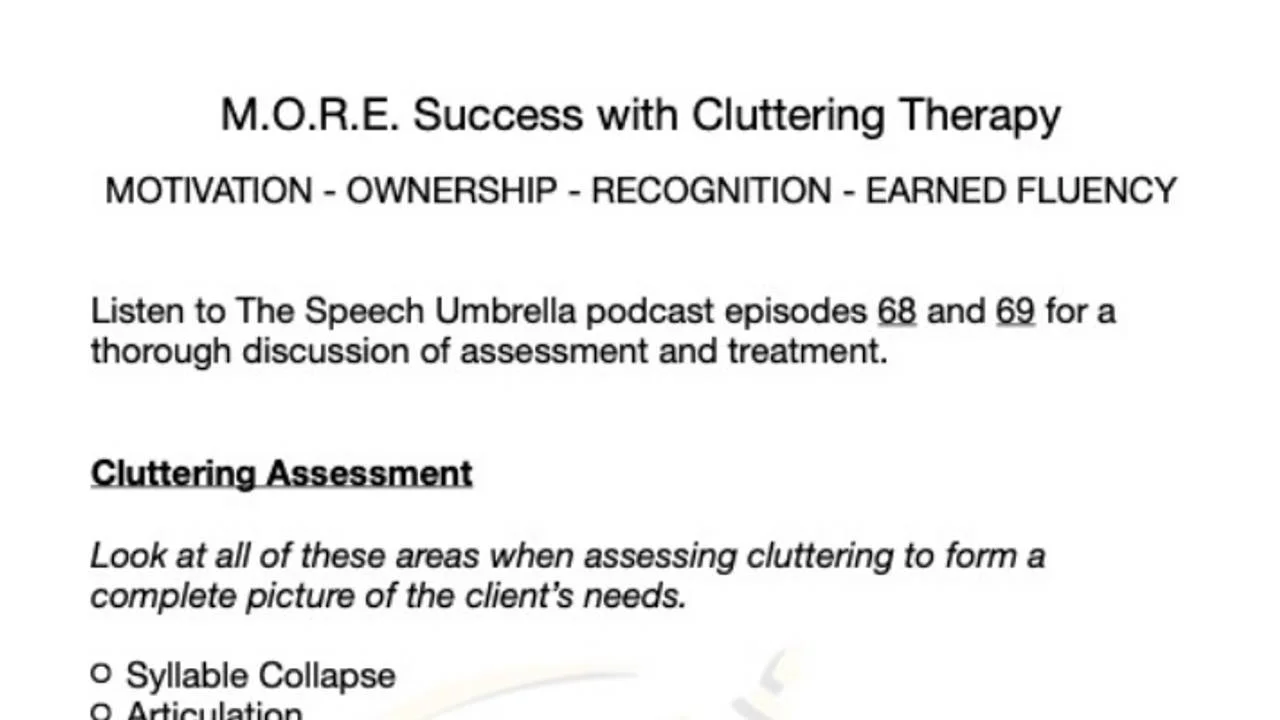
M.O.R.E. Success with Cluttering Therapy Cheat Sheet
Here’s your M.O.R.E. cheat sheet for assessing and treating cluttering. M.O.R.E. stands for motivation, ownership, recognition and earned fluency. More than a to do list, M.O.R.E. is a framework to help clients first make the cognitive changes that will lead to behavioral changes.
Use the M.O.R.E. approach to help your clients achieve lasting changes in their communication skills. The cheat sheet will help you track nine areas to assess, as well as activities to build motivation, ownership, recognition and earned fluency.
Listen to The Speech Umbrella podcast episodes 68 and 69 for thorough discussions on assessing and treating cluttering.
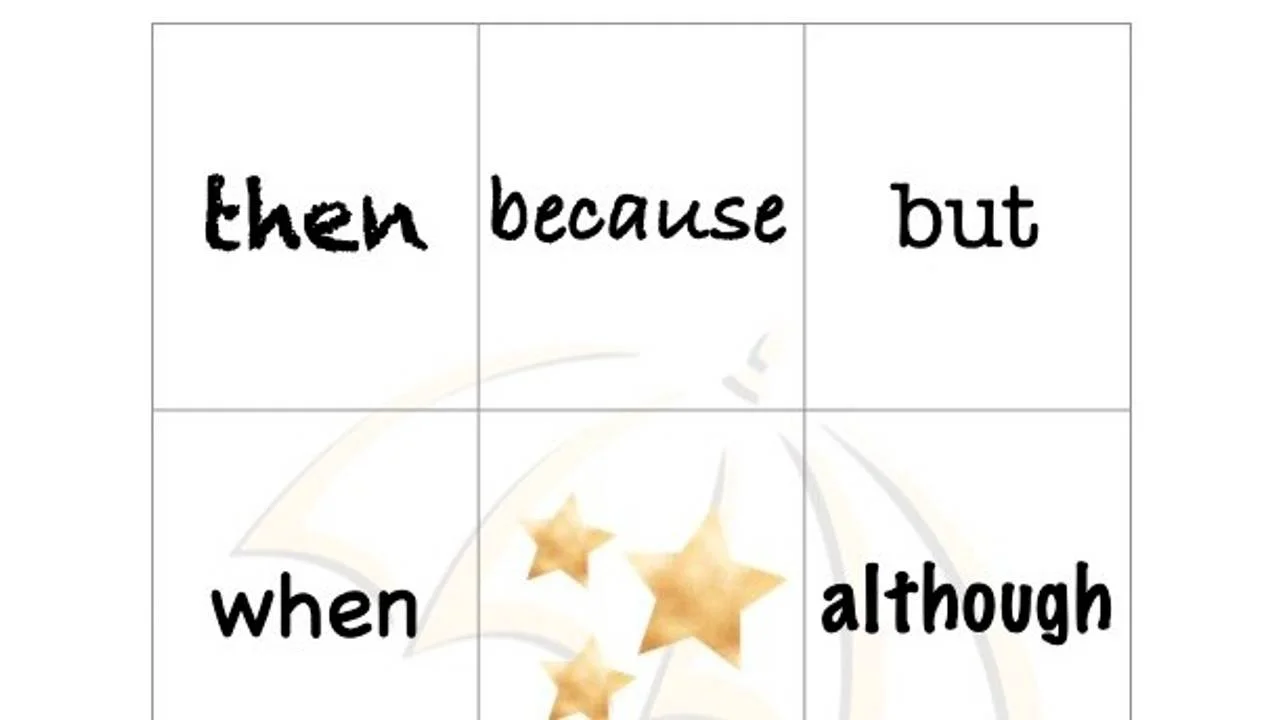
Connecting Words Bingo
Do you want boost your clients’ use of conjunctions when story telling? This bingo game is for clients who are ready to branch out from using just a few conjunctions such as “because” or “so.” I call them “connecting words” because that’s easier to understand.
The space in the center can be a “free” space, or it can be for when they use a “sparkle” word. “Sparkle” words are more sophisticated vocabulary choices, such as “terrified” instead of “scared” or “huge” rather than “big.” Use bingo chips or dry erase markers to mark off each conjunction used in a story retell. You can play it individually, or collaboratively, and you may even want to go for blackout for a challenge!
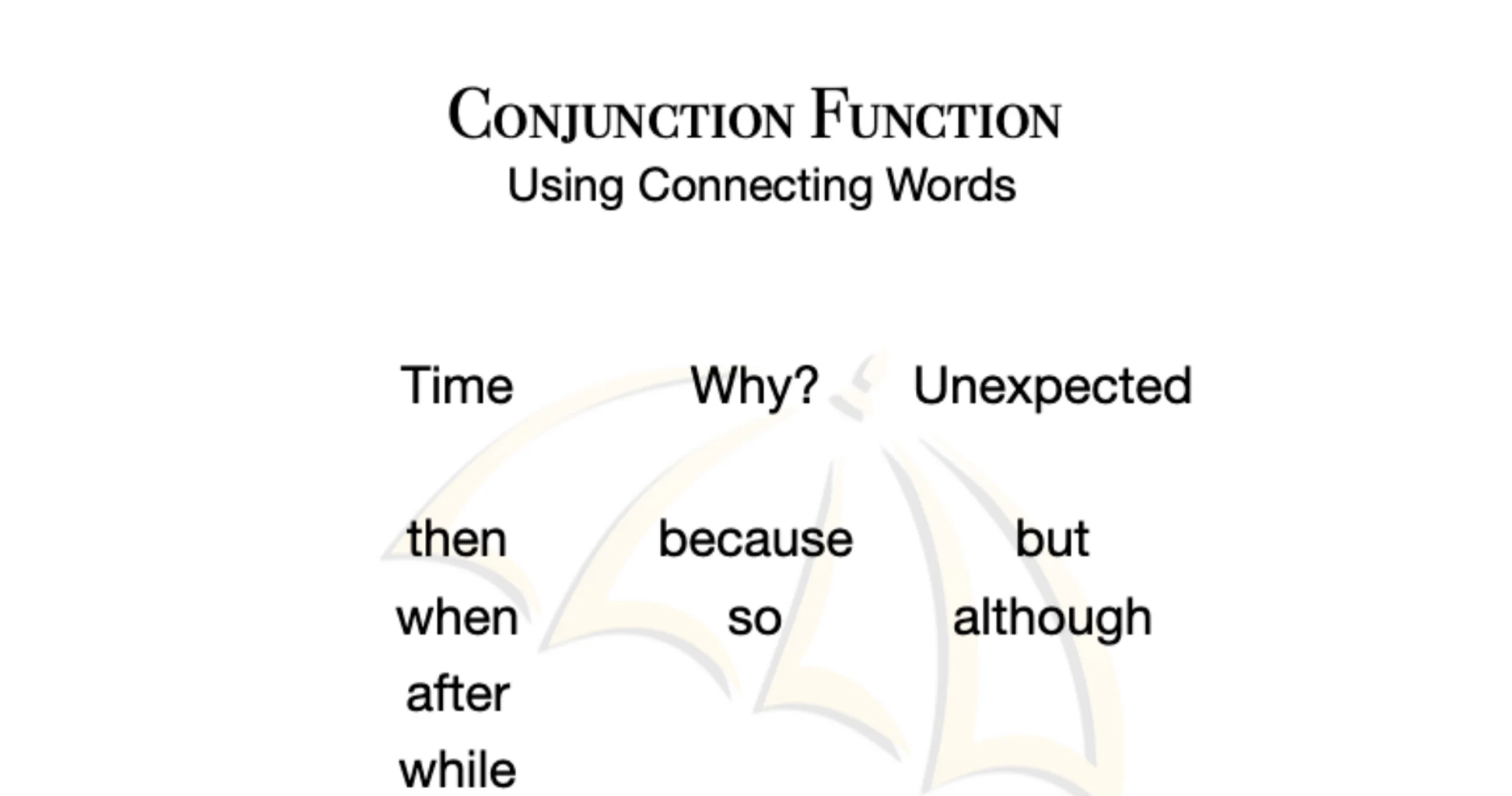
Conjunction Function
Conjunction Function is a companion resource to Connecting Words Bingo. If your clients need help figuring out which conjunction to use when, conjunction function shows three ways to use the eight conjunctions on the bingo card. Check out my Simple Tools video for a fun, hands on conjunction activity, and Episode 60, Runaway Conjunctions, for a deeper dive into teaching conjunctions.
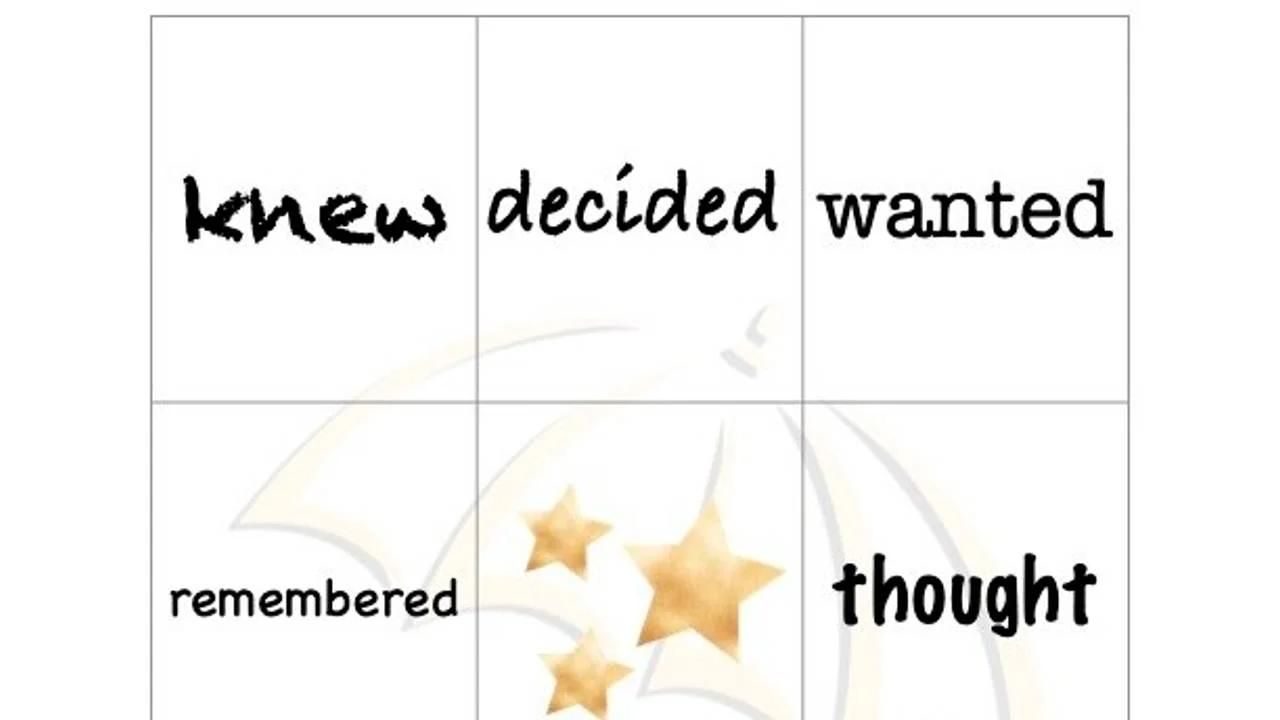
Mental Verbs Bingo
This bingo game is for clients who are ready to branch out from using a few mental verbs such as “decided” or “wanted.” Besides “decided” and “wanted” it includes “knew/remembered/thought/wondered/wished/realized.”
The space in the center can be a “free” space, or it can be for when they use a “sparkle” word. “Sparkle” words are more sophisticated vocabulary choices, such as “terrified” instead of “scared” or “huge” rather than “big.”
Another way to use the center space is to use “because” or “so” to explain character choices in light of their mental state. Examples from Harry Potter would be “Harry and Ron took the Weasley’s flying car because they wondered what it be like to drive it.” Or, “Harry and Ron knew Hermione was in danger, so they went looking for her.” Use bingo chips or dry erase markers to mark off each mental verb used in a story retell. You can play it individually, or collaboratively, and you may even want to go for blackout for a challenge!
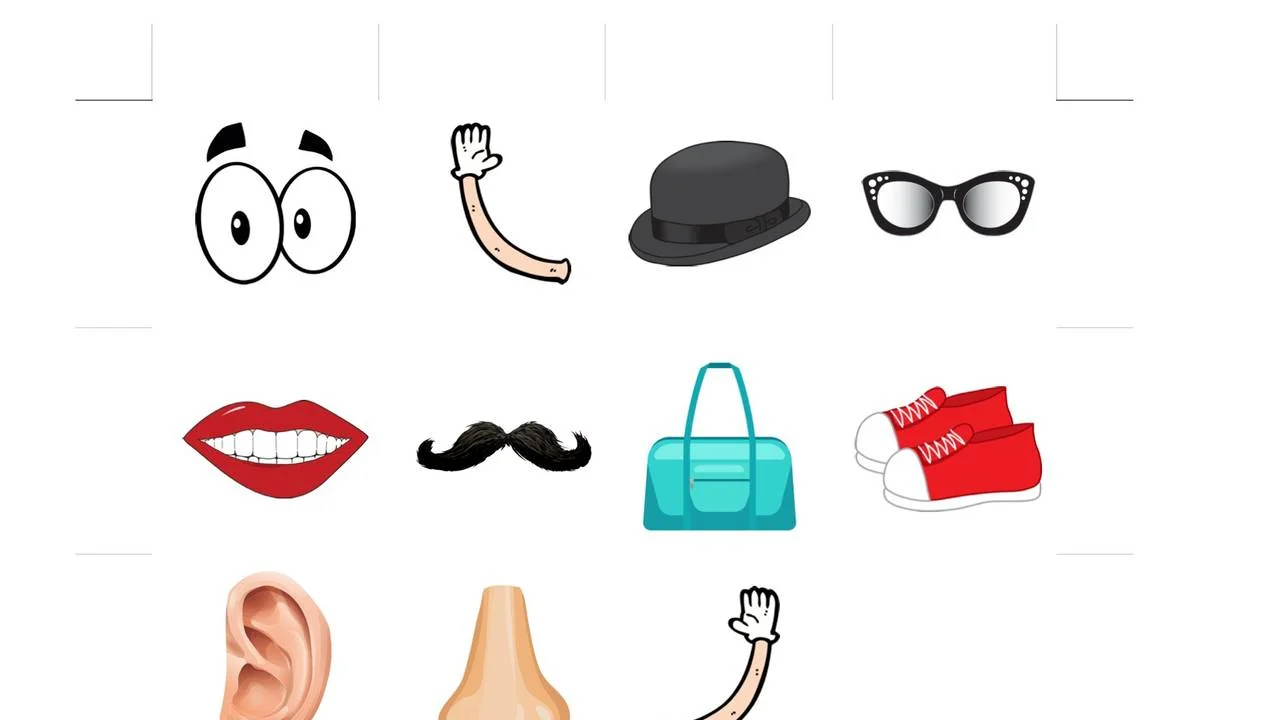
Potato Head Pieces
Mr. and Mrs. Potato Head are classic toys that can be use in a number of therapy activities. It can be really handy to have pictures of the pieces to build the build the potato head. Print on card stock, cut on the lines and laminate for a long lasting therapy tool.
Check out these podcasts for ideas:
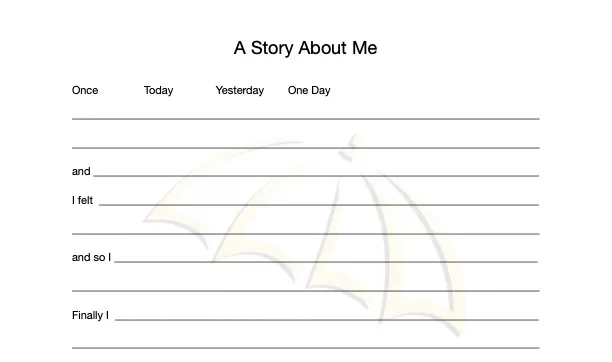
A Story About Me
Telling stories builds clients in so many ways. This simple form guides your clients as they write the stories about their day and becomes the building block to journaling. The student is guided through each part of the story and has a place to draw a companion picture.
I talk about how I use this tool in podcast episode 47: Dancing the Macarena on an Iceberg.
Short Stories for Narrative Intervention with Teens and Young Adults
Narrative language intervention with young adults can get complicated pretty fast, leaving therapists wondering how to intervene effectively. Join us as we take a deep dive into a case study with a young adult. I covered my methods in episode 34 of The Speech Umbrella podcast. Part of the method includes use of short stories. Here is a list of my favorite short stories for young adults that need narrative intervention.
Three Tony Stories
The Tony Stories are simple 5 part illustrated stories, suitable for clients who are just beginning to tell narratives. They can also be presented with more complex grammar for clients who are ready for it. All the stories feature Tony as the main character.
Having multiple stories with the same character helps clients who struggle with name recall. A familiar name lowers the cognitive load for them, and they can began to include proper names in their stories with less effort. The three stories included in this download are:
- Milk and Cookies
- Tony Goes Fishing
- Truck on Fire!
Listen to podcast episodes “To Infinity and Beyond” and “Where Everybody Knows Your Name” to learn more about how to use them.
If you like these stories, I have 50 stories available in the Simple Tales product.
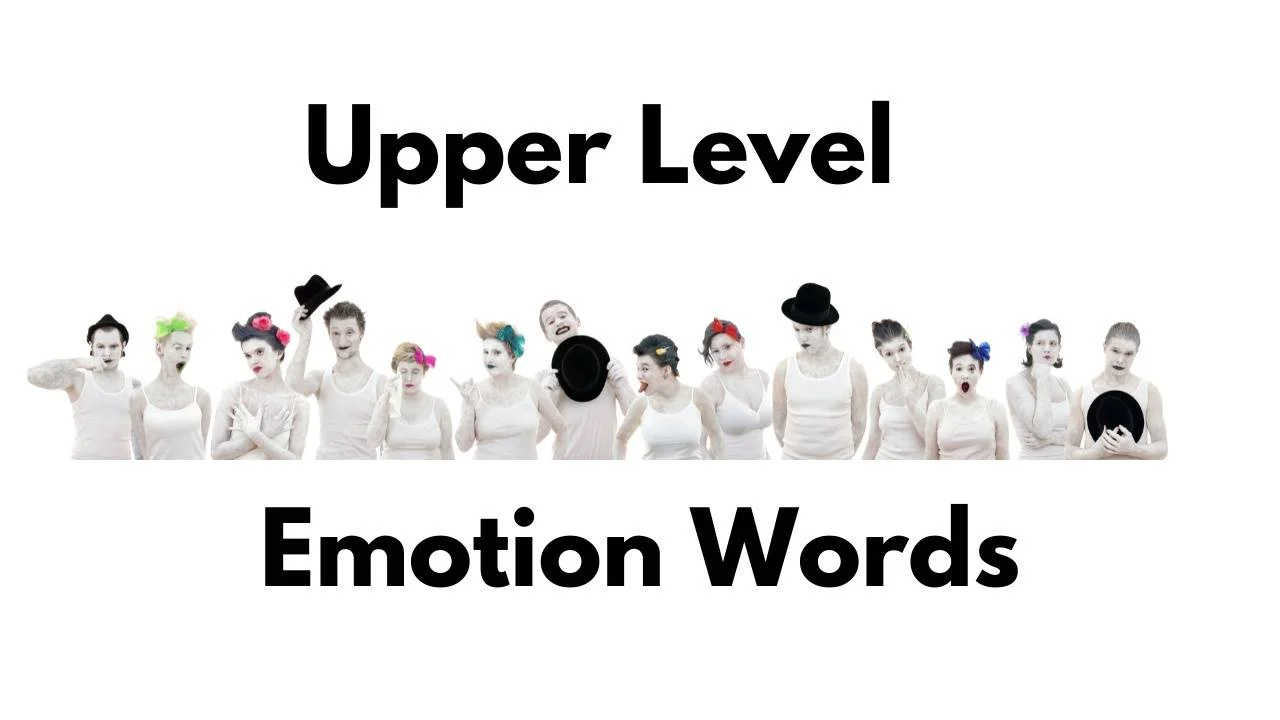
Upper Level Emotion Words
Narrative language intervention with young adults can get complicated pretty fast, leaving therapists wondering how to intervene effectively. Join us as we take a deep dive into a case study with a young adult. I covered my methods in episode 34 of The Speech Umbrella podcast. Part of the method includes use of short stories. Here is a list of my favorite short stories for young adults that need narrative intervention.
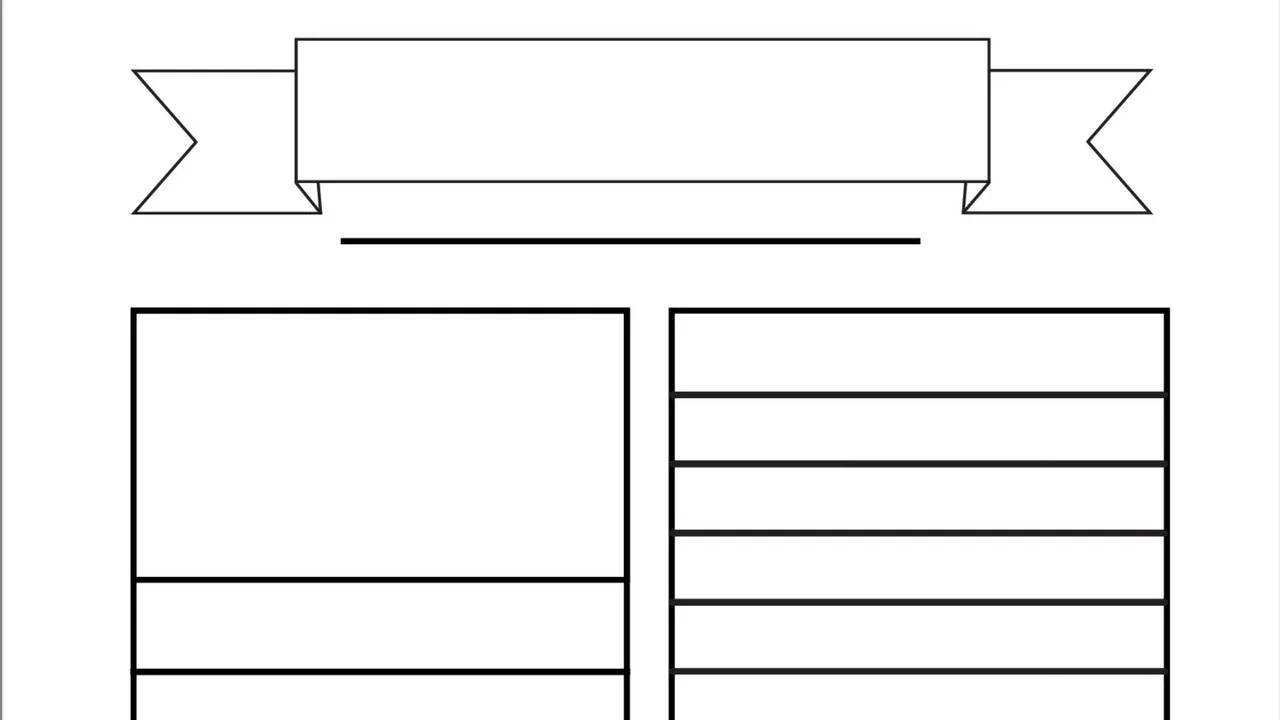
Newspaper Template
Nurture curiosity and complex language while playing reporter. Use this template for expository text in newspaper format. Clients have loads of fun while refining their written language and becoming reporters. Podcast episode 74, “Using the 5 Whys to Foster a Growth Mindset,” delves into asking and answering “why” to support language development.
The PDF has a place for the title, author’s name, an illustration, and two columns for writing.
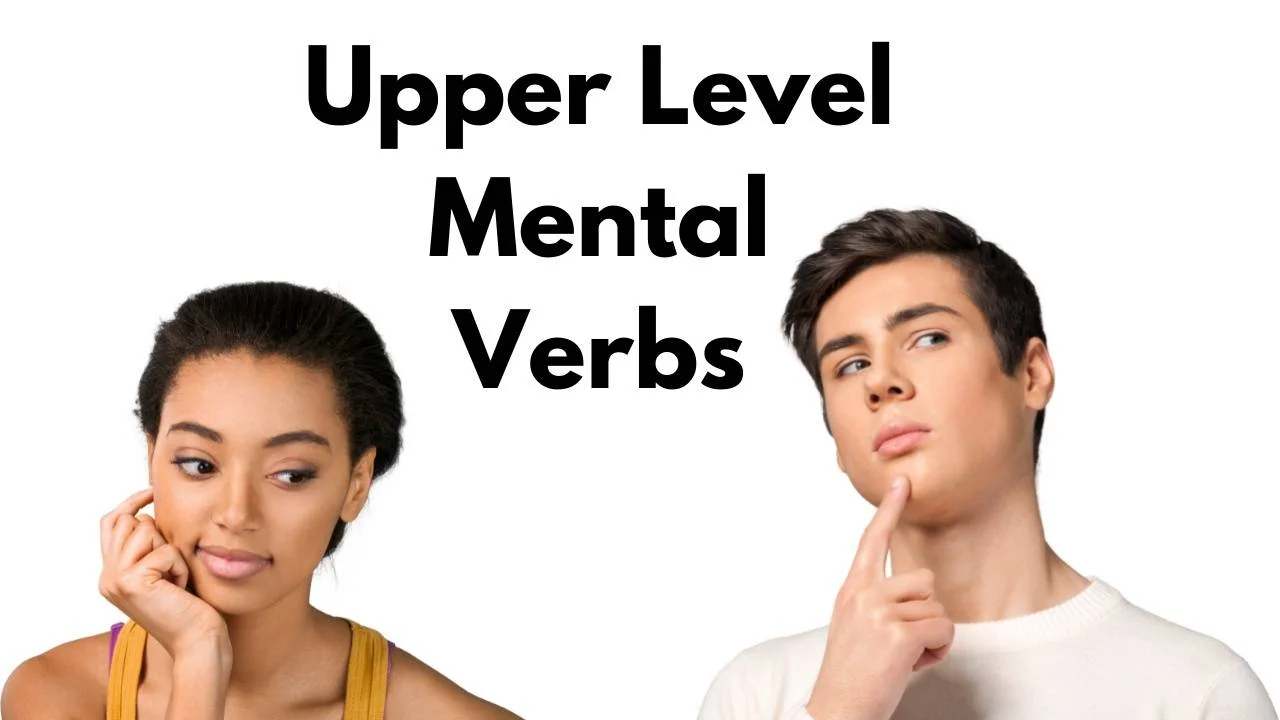
Upper Level Mental Verbs
Narrative language intervention with young adults can get complicated pretty fast, leaving therapists wondering how to intervene effectively. Join us as we take a deep dive into a case study with a young adult. I covered my methods in episode 34 of The Speech Umbrella podcast. Part of the method includes use of short stories. Here is a list of my favorite short stories for young adults that need narrative intervention.
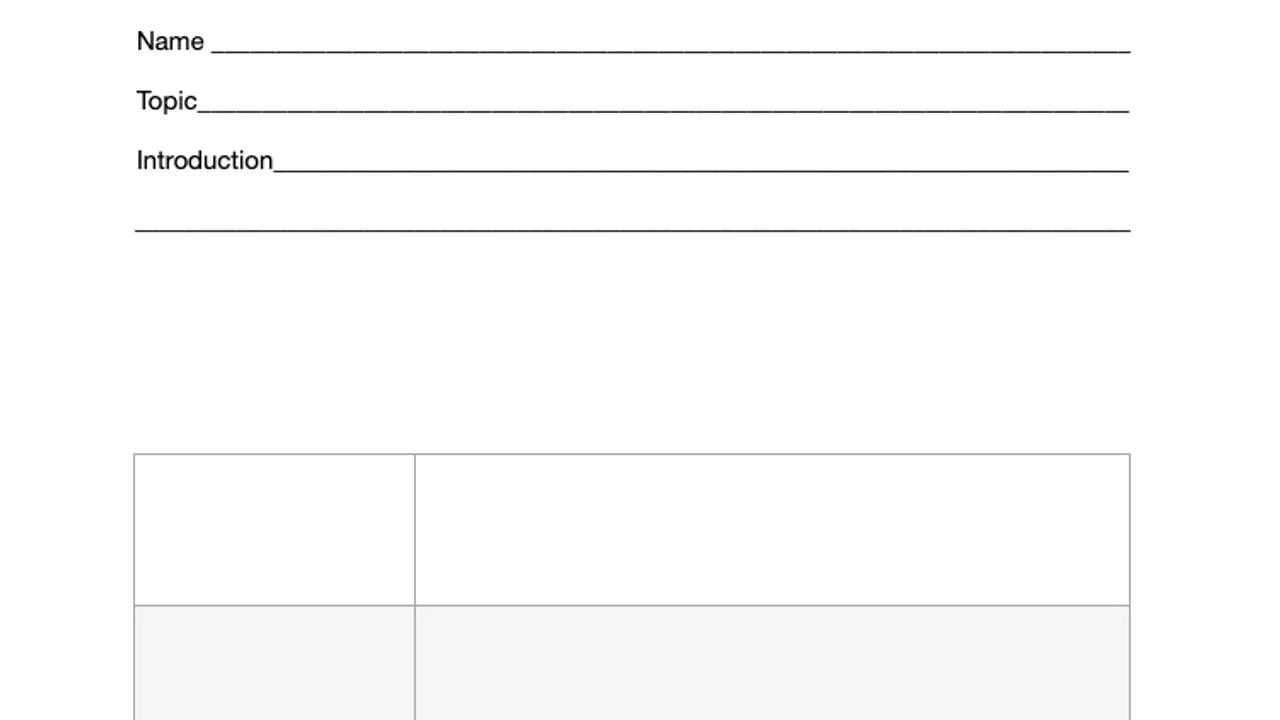
Two Column Note Form
This is a two column note form, which is part of the Sketch and Speak method described by Dr. Teresa Ukrainetz in episode 72 of The Speech Umbrella podcast. Categories under the main topic go in the left column, and the client’s pictographs and key words in the right column. (See sample below.) You may wish to create your own forms for certain topics, such as animals, with consistent categories such as “habitat” “appearance” and so forth. Dr. Ukrainetz suggests including an “interesting facts” category. In the meantime, this blank template can get you started using Sketch and Speak in therapy.
Here is a further explanation from Dr. Ukrainetz.
“The paired sessions can be anywhere from three times (just enough to learn the strategies) to however many pairs the SLP wants to maximize learning from the texts. After that, the SLP can start mixing it up and expanding, so long as for each note, however it is done, the student says the sentence fully then says it again (and maybe again until it is firmly in their heads).”